
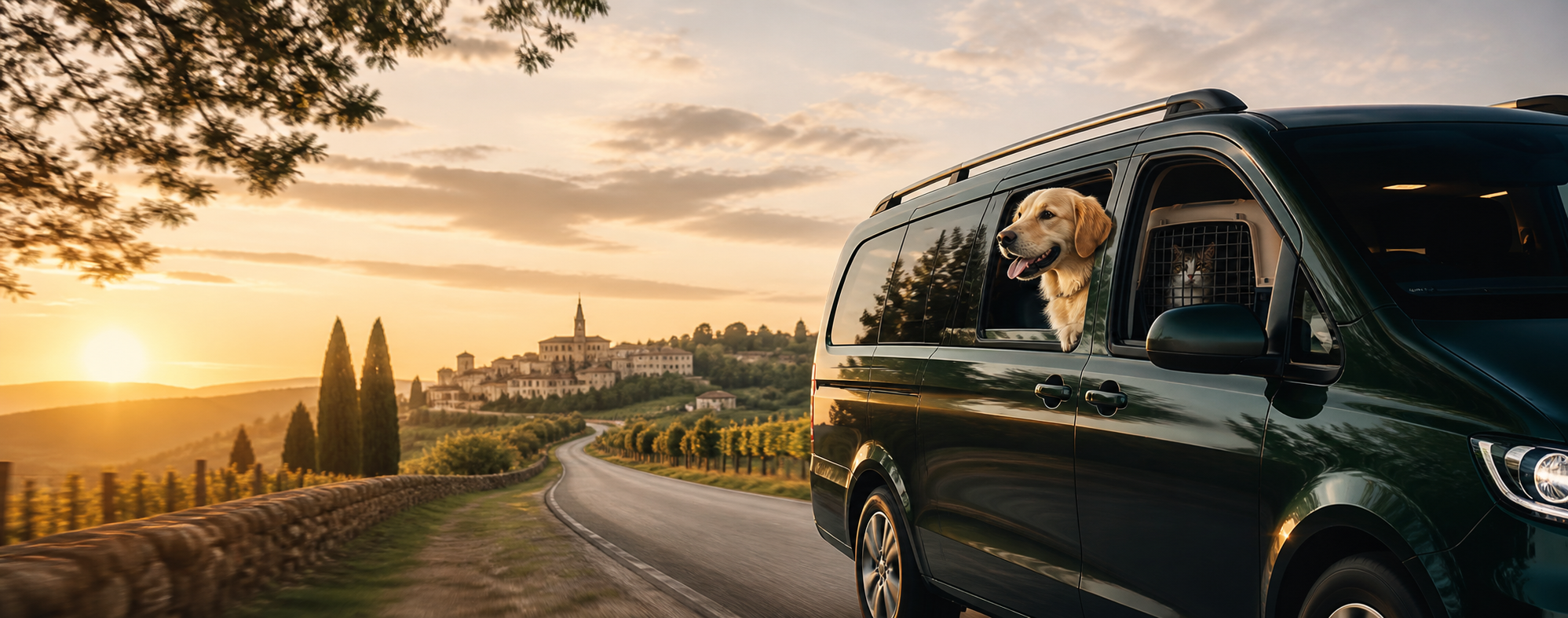
Prepare over days or weeks, not on departure morning: introduce the secured carrier or harness, build up with short drives, confirm health and documents, pack water and familiar essentials, and map safe stops. The dog should never roam freely or be left in a parked vehicle.

Seven to fourteen days before
Use short drives to observe motion sensitivity and behaviour. Let the dog rest in the travel setup while the vehicle is stationary, then increase duration gradually. Ask your veterinarian about any health concern; do not start sedatives without veterinary direction.
- verify microchip and contact details
- test the secured crate or harness
- prepare copies of records
- save destination and emergency contacts
Pack for controlled stops
Carry water, a bowl, leash, waste bags, bedding, ordinary food, prescribed medication and cleaning supplies. Open doors only after the leash is attached and the surroundings are checked.
- two-point escape control at doors
- non-slip carrier base
- separate document pouch
- temperature and ventilation checks
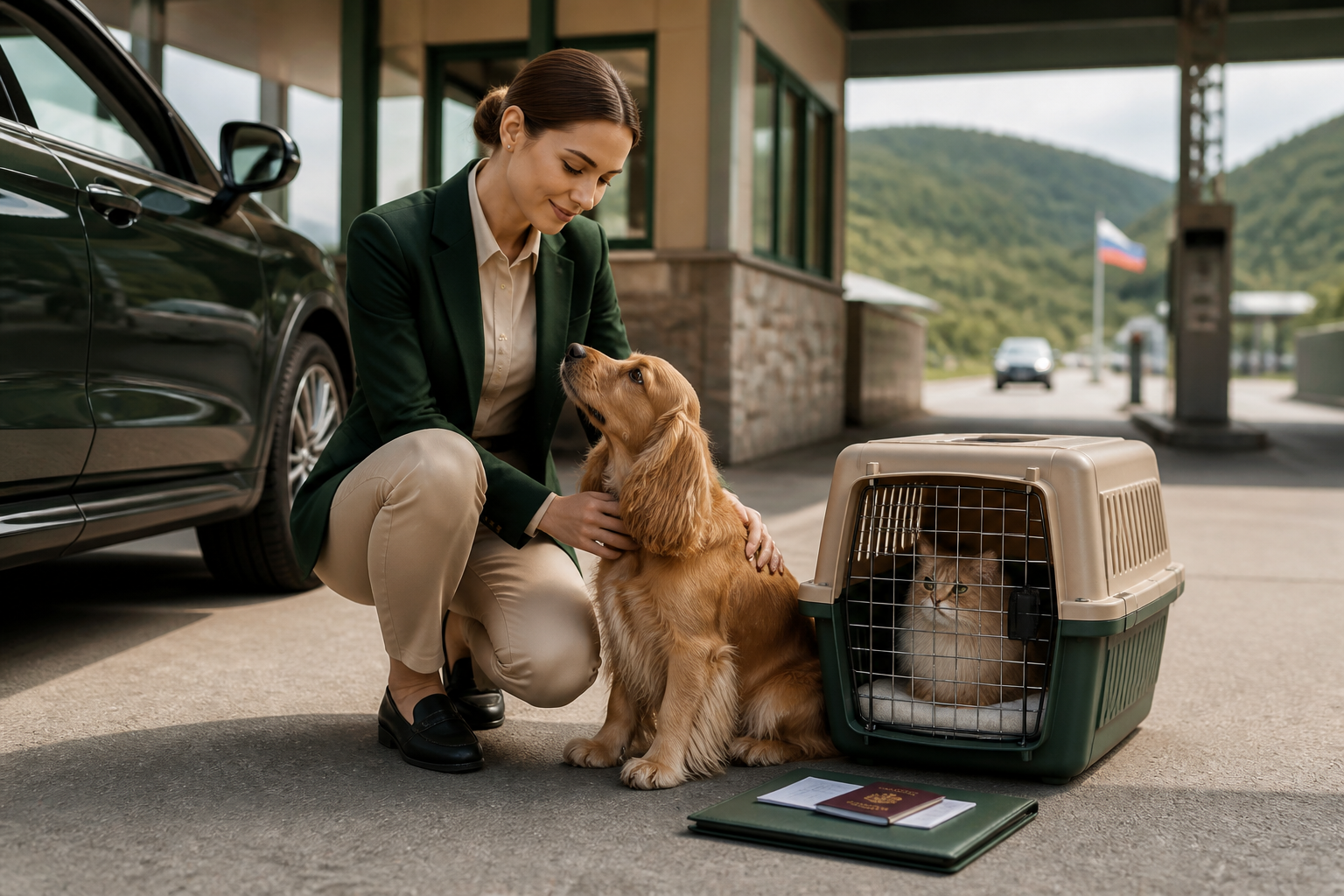
Departure and feeding
Follow veterinary advice for the individual dog. CDC guidance recommends planning feeding several hours before a car journey to reduce nausea; exact timing can vary. Keep the first hour calm and use planned, secure breaks rather than improvised roadside stops.
Questions people ask next
How often should a dog stop on a long journey?+
There is no universal interval. Plan regular secure breaks and adjust for age, health, hydration, weather and veterinary advice.
Should I sedate my dog for a long drive?+
Do not self-medicate. Sedation can change balance, breathing and temperature control; discuss any medication with the dog’s veterinarian.
Check the live rule
Sources were reviewed on 2026-08-08. Operator and national requirements may change after publication.
 FIELD FILE / 01Ground vs air pet travel: a welfare-first decision framework
 FIELD FILE / 03Border queues with pets: build a contingency plan before departure