
Treat a border delay as a planned operating condition: carry extra water and supplies, protect ventilation, keep documents accessible, identify legal entry points and never release an animal in an unsecured queue area. Check official border and entry-point information close to departure.
Confirm the legal crossing first
Pets entering the EU from many non-EU countries must use a designated travellers’ point of entry for documentary and identity checks. A faster crossing is not useful if it cannot process the movement.
- designated entry point
- opening hours
- document check process
- transit-country requirements
Carry delay capacity
Pack more water and absorbent supplies than the nominal journey requires. Keep airflow paths clear when the vehicle is stationary. If the delay pushes the route into a high-temperature period, use a predefined alternative rather than improvising.
- extra water
- cooling and ventilation plan
- safe sanitation kit
- backup stop or overnight option

Control doors and documents
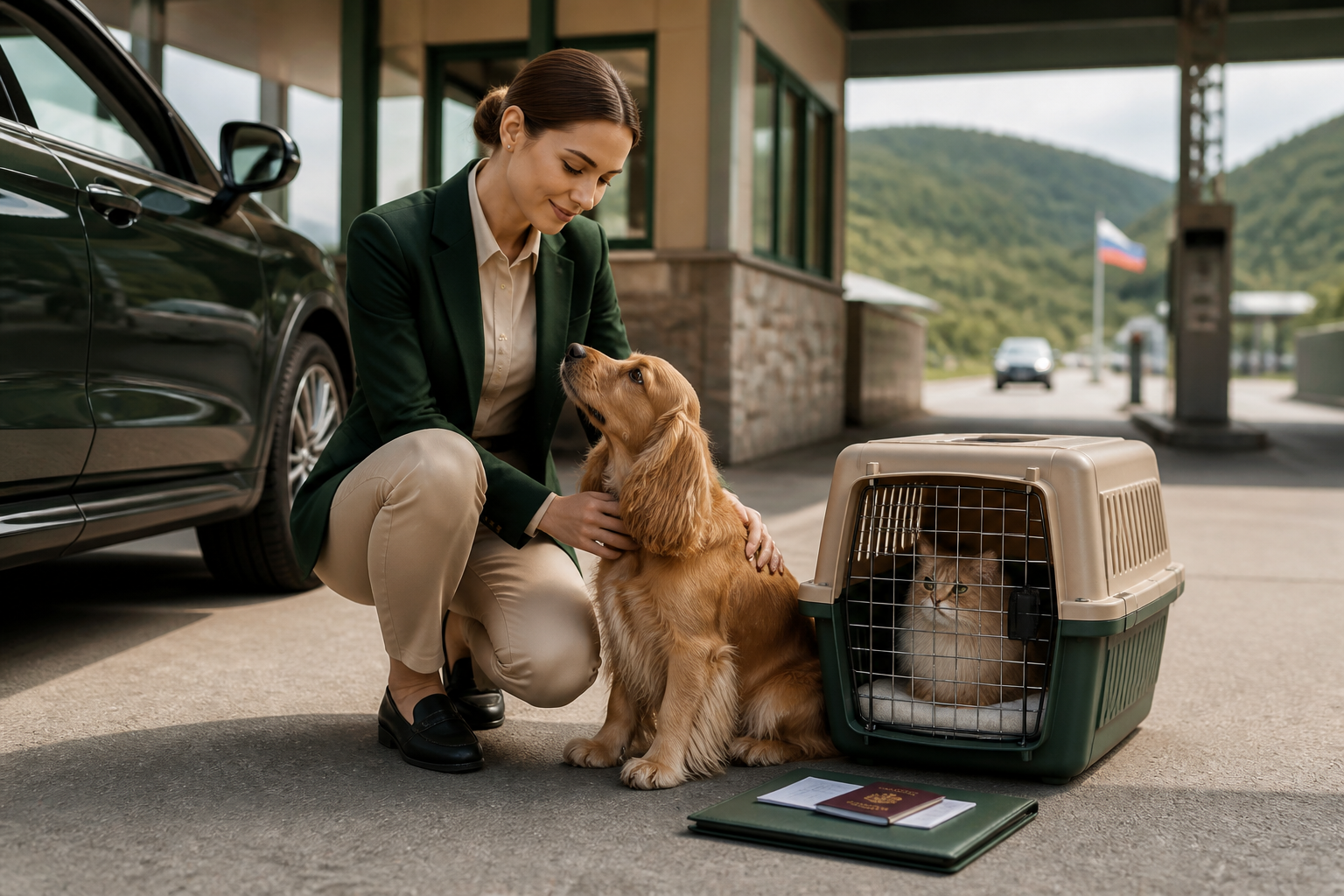
Queues are noisy and unpredictable. Attach the leash before opening any door and keep cats inside a closed vehicle when transferring to a litter setup. Store originals and copies in a pouch that can be reached without unloading the animal.
Questions people ask next
Can I switch to any nearby border crossing?+
Not automatically. Confirm that the crossing is open to your vehicle and is a valid travellers’ point of entry for the pet’s situation.
Should I walk my dog in the queue?+
Only where permitted and only with secure restraint, safe separation from traffic and an escape-control plan.
Check the live rule
Sources were reviewed on 2026-08-08. Operator and national requirements may change after publication.
 FIELD FILE / 01Ground vs air pet travel: a welfare-first decision framework
 FIELD FILE / 02How to prepare a dog for a 20-hour road journey