
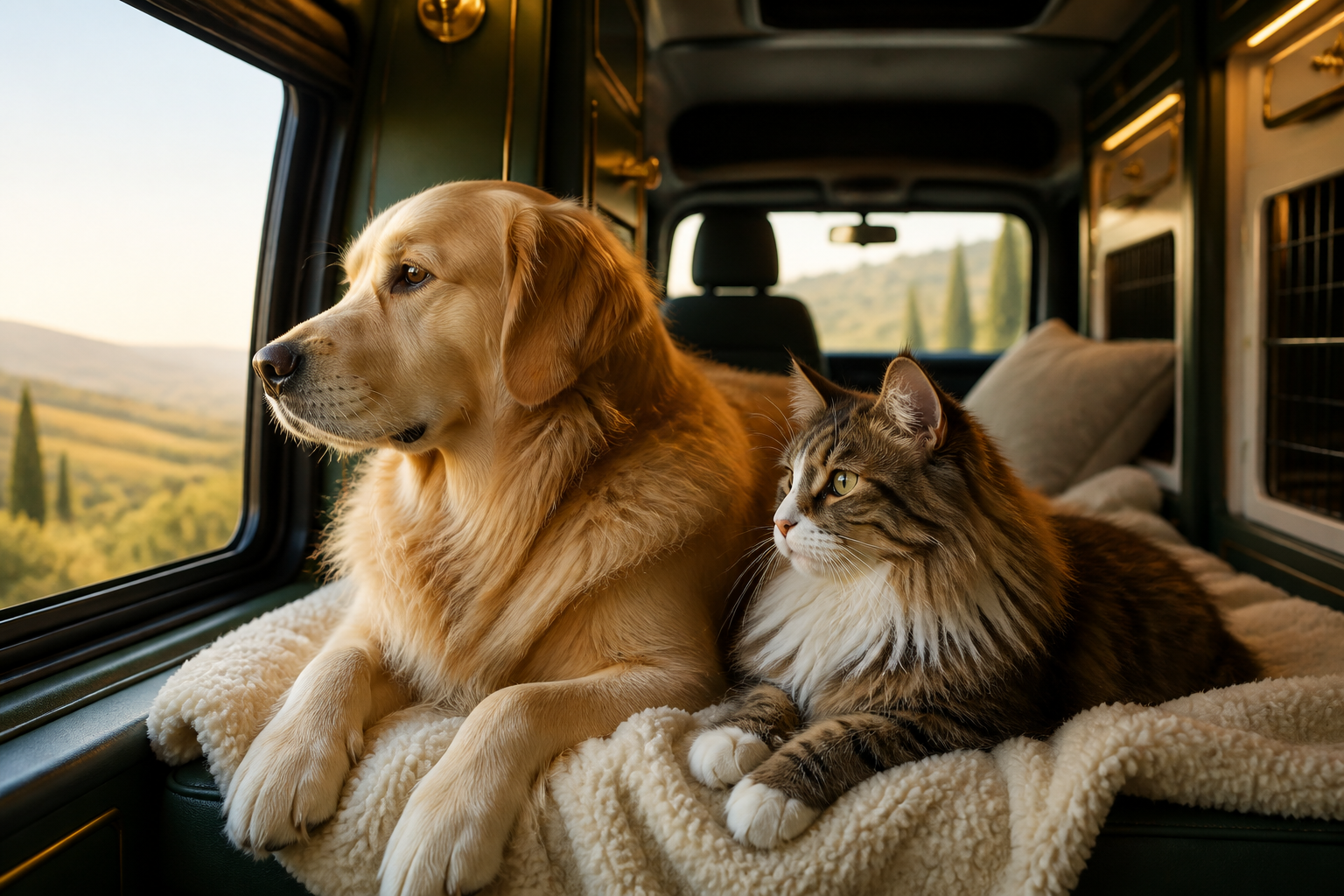
Ground travel usually offers more control over stops, observation and route changes, while air travel can reduce total journey time on long distances. The better option depends on the animal’s health and temperament, the number of handovers, weather limits, carrier rules and whether the owner can remain close.

Start with the animal, not the timetable
A short flight with multiple airport handovers may be harder for one animal than a longer direct road journey. For another pet, limiting total travel time is the priority. Ask a veterinarian whether age, respiratory anatomy, medication, mobility or a recent illness changes the risk profile.
- health and fitness to travel
- familiarity with a carrier
- sensitivity to noise and handling
- need for observation or medication
Compare the real journey
Count every stage: home-to-terminal transfer, check-in, holding, flight, border control and final collection. For road travel, include border queues, rest areas, overnight stops and contingency mileage. The mode with fewer uncontrolled transitions is often easier to manage.
- door-to-door time
- number of handovers
- temperature exposure
- owner access
- backup options after delay

Make a written go / no-go plan
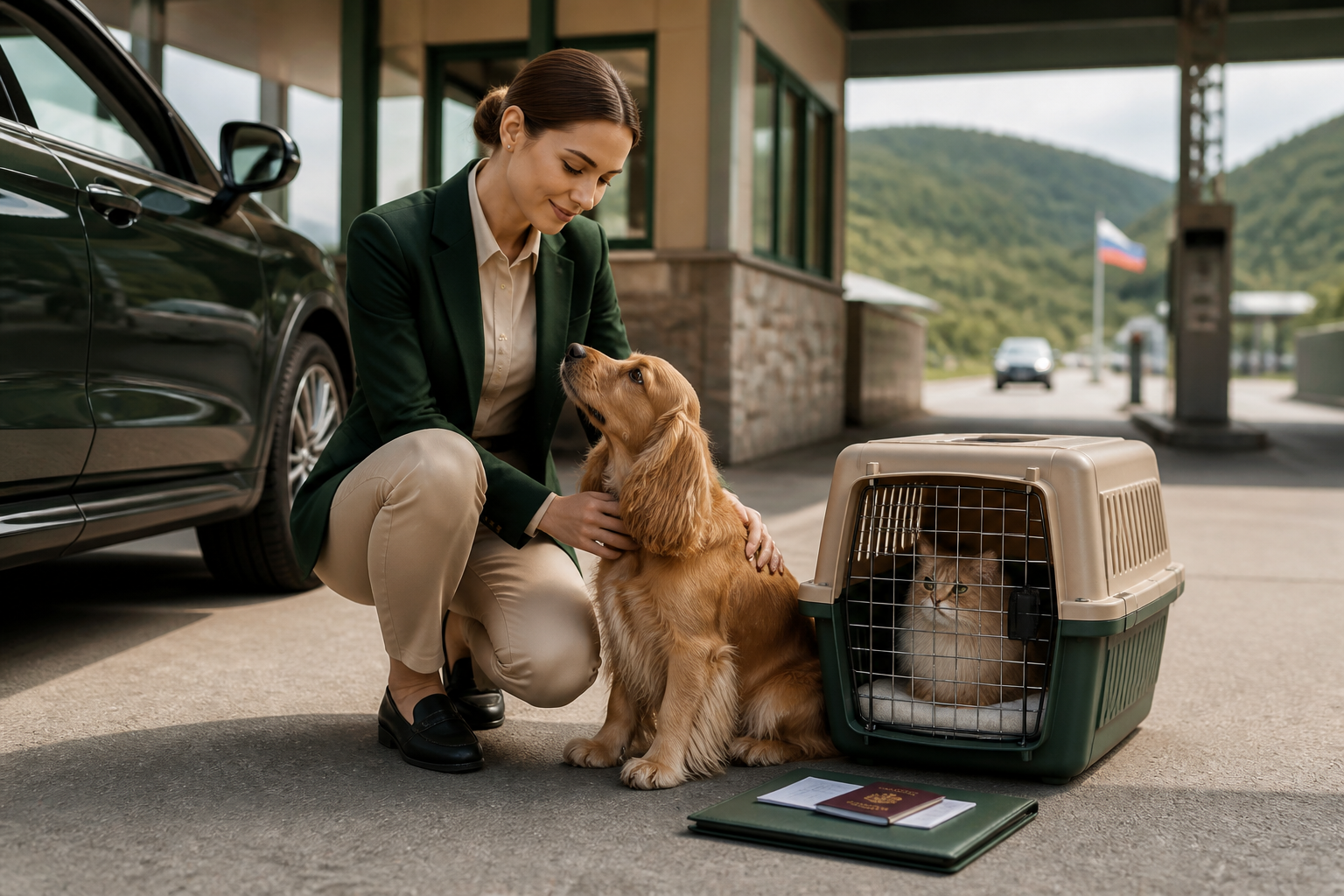
Before booking, define weather limits, required documents, carrier acceptance, feeding instructions and who can make decisions if the itinerary changes. Reconfirm operator rules close to departure because airline, ferry and border procedures can change.
Questions people ask next
Is flying always faster for a pet?+
Not necessarily. Compare door-to-door time, including check-in, transfers, holding and collection—not flight time alone.
Is road travel always less stressful?+
No. Road travel may allow observation and stops, but very long duration, heat, motion sensitivity or poor restraint can create different risks.
Check the live rule
Sources were reviewed on 2026-08-08. Operator and national requirements may change after publication.
 FIELD FILE / 01How to prepare a dog for a 20-hour road journey