
In a heatwave, move travel to the coolest hours, reduce stationary exposure, verify continuous cooling and water, and define a no-go threshold with veterinary input. An open window or shaded parking space does not make a parked vehicle safe.
Heat risk rises while stationary
Vehicles can heat rapidly even when outdoor conditions seem moderate. Border queues, ferry staging and rest stops need the same cooling plan as driving. Never leave an animal alone in a parked car.
- air-conditioning tested before departure
- airflow reaches every carrier
- water remains accessible
- temperature checked at animal level
Change timing before changing equipment
Leaving before sunrise or later in the evening can reduce risk more effectively than adding gadgets to a poor schedule. Use the most direct feasible route and avoid high-traffic staging periods when possible.
- coolest travel window
- shorter queue exposure
- indoor or shaded legal stops
- backup accommodation that accepts animals

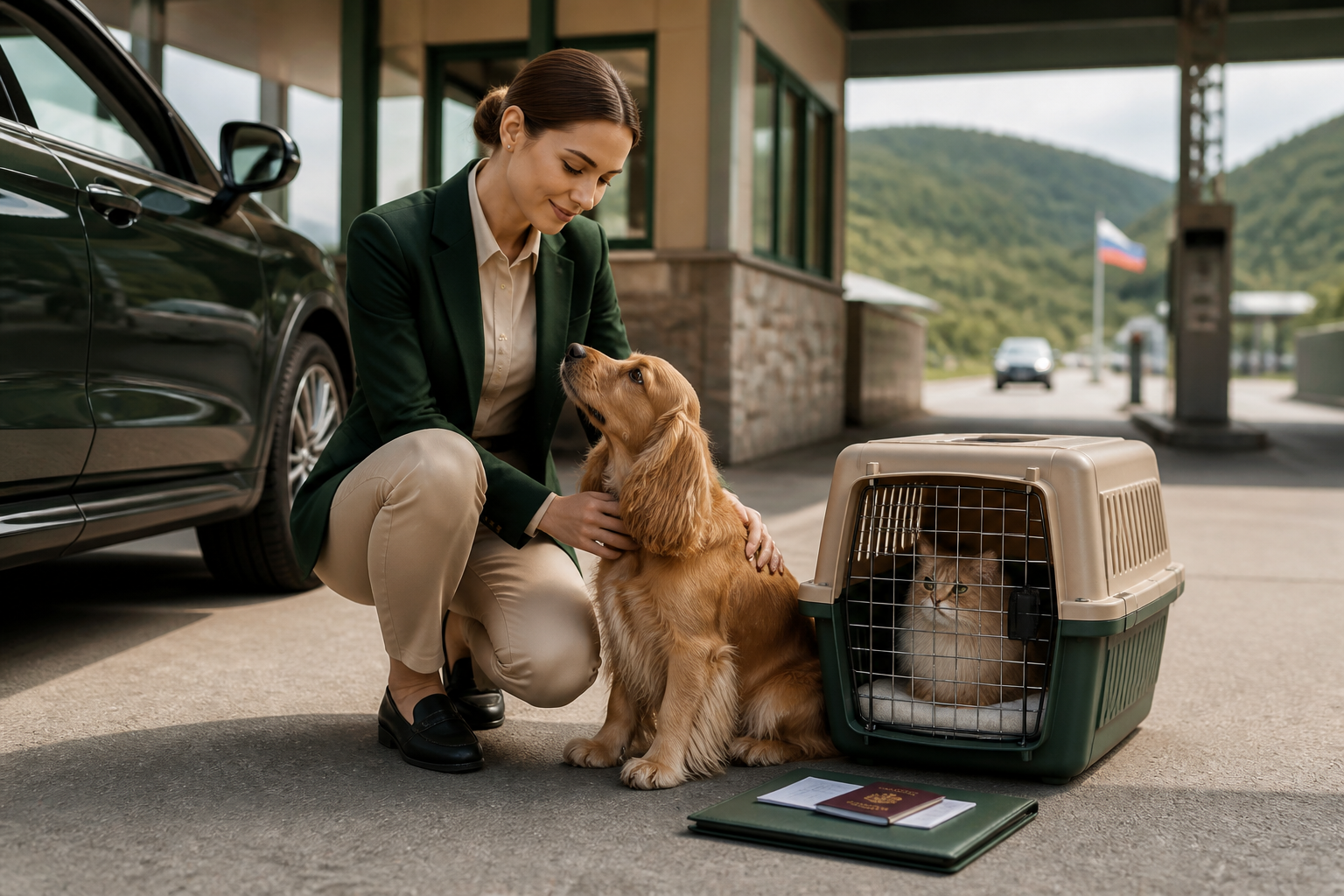
Know when to stop
Rapid breathing, weakness, confusion or collapse require urgent veterinary attention. If an animal appears unwell, stop the journey safely, begin appropriate cooling and contact a veterinarian or emergency service.
Questions people ask next
Is a cracked window enough when parked?+
No. A parked vehicle can become dangerously hot very quickly even in shade or with windows partly open.
Should I put ice directly on an overheated dog?+
Emergency cooling advice depends on the situation. Start safe cooling and contact a veterinarian urgently rather than relying on improvised treatment.
Check the live rule
Sources were reviewed on 2026-08-08. Operator and national requirements may change after publication.
 FIELD FILE / 01Ground vs air pet travel: a welfare-first decision framework
 FIELD FILE / 02How to prepare a dog for a 20-hour road journey